

Toilet Training
When Are Kids Ready to Toilet Train?
Many parents are unsure about when to start toilet training or "potty training." Not all kids are ready at the same age, so it's important to watch your child for signs of readiness, such as stopping an activity for a few seconds or grabbing their diaper.
Instead of using age, look for signs that your child may be ready to start heading for the potty, such as being able to:
- follow simple instructions
- understand and use words about using the potty
- make the connection between the urge to pee or poop and using the potty
- keep a diaper dry for 2 hours or more
- get to the potty, sit on it for enough time, and then get off the potty
- pull down diapers, disposable training pants, or underpants
- show an interest in using the potty or wearing underpants
Most children begin to show these signs when they're between 18 and 24 months old. Some, though some may not be ready until later than that. And boys often start later and take longer to learn to use the potty than girls.
There are some times when you may want to put off starting toilet training, such as:
- when traveling
- around the birth of a sibling
- changing from the crib to the bed
- moving to a new house
- when your child is sick (especially if diarrhea is a factor)
-
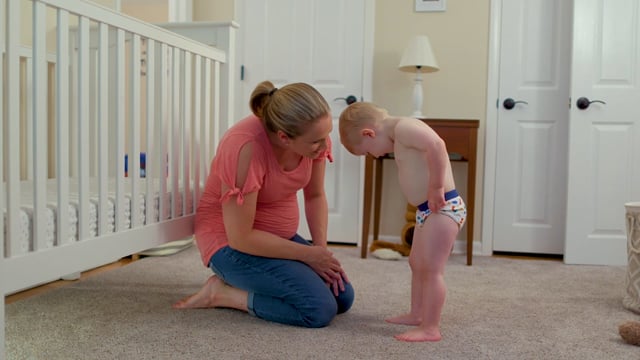
Potty Training Your Child
Every parent wonders when they can finally say goodbye to diapers for good. Here's how to help your child make the switch from diapers to big kid underpants.
How Long Does Toilet Training Take?
Teaching a toddler to use the potty isn't an overnight task. It often takes between 3 and 6 months, but can take more time or less time for some children. If you start too soon, the process tends to take longer. And it can take months to even years to master staying dry at night.
Potty Types
The two basic potty options are:
- a standalone, toddler-size potty chair with a bowl that can be emptied into the toilet
- a toddler-size seat that can be placed on top of a toilet seat that will let your child feel more secure and not fear falling in. If you choose this, get a stepping stool so your child can reach the seat comfortably and feel supported while having a bowel movement.
It's usually best for boys to first learn to use the toilet sitting down before learning to pee standing up. For boys who feel awkward — or scared — about standing on a stool to pee in the toilet, a potty chair may be a better option.
You may want to get a training potty or seat for every bathroom in your house. You may even want to keep a potty in the trunk of your car for emergencies. When traveling long distances, be sure to take a potty seat with you and stop every 1 to 2 hours. Otherwise, it can take too long to find a restroom.
About Training Pants
Disposable training pants are a helpful step between diapers and underwear. Because kids' nighttime bladder and bowel control often lags behind their daytime control, some parents like using training pants at night. Others prefer that their child use training pants when they're out and about. Once the training pants remain dry for a few days, kids can make the switch to wearing underwear.
But some people think that disposable training pants might make kids think it's OK to use them like diapers, thus slowing the toilet-teaching process.
Ask your doctor if your child would benefit from using disposable training pants as a transitional step.
Tips for Toilet Training
Even before your child is ready to try the potty, you can prepare your little one by teaching about the process:
- Use words to express the act of using the toilet ("pee," "poop," and "potty").
- Ask your child to let you know when a diaper is wet or soiled.
- Identify behaviors ("Are you going poop?") so that your child can learn to recognize the urge to pee and poop.
- Get a potty chair your child can practice sitting on. At first, your child can sit on it wearing clothes or a diaper. When ready, your child can go bare-bottomed.
If you've decided that your child is ready to start learning how to use the potty, these tips may help:
- Set aside some time to devote to the potty-training process.
- Don't make your child sit on the toilet against their will.
- Show your child how you sit on the toilet and explain what you're doing (because your child learns by watching you). You also can have your child sit on the potty seat and watch while you (or a sibling) use the toilet.
- Establish a routine. For example, you may want to begin by having your child sit on the potty after waking with a dry diaper, or 45 minutes to an hour after drinking lots of liquids. Only put your child on the potty for a few minutes a couple of times a day, and let your child get up if he or she wants to.
- Have your child sit on the potty within 15 to 30 minutes after meals to take advantage of the body's natural tendency to have a bowel movement after eating (this is called the gastro-colic reflex). Also, many kids have a time of day they tend to have a bowel movement.
- Ask your child to sit on the potty if you see clear clues of needing to go to the bathroom, such as crossing legs, grunting, or squatting.
- Empty a bowel movement (poop) from your child's diaper into the toilet, and tell your child that poop goes in the potty.
- Avoid clothes that are hard to take off, such as overalls and shirts that snap in the crotch. Kids who are potty training need to be able to undress themselves.
- Offer your child small rewards, such as stickers or time reading, every time your child goes in the potty. Keep a chart to track of successes. Once your little one appears to be mastering the use of the toilet, let them pick out a few new pairs of big-kid underwear to wear.
- Make sure all caregivers — including babysitters, grandparents, and daycare workers — follow the same routine and use the same names for body parts and bathroom acts. Let them know how you're handling toilet training and ask that they use the same approaches so your child won't be confused.
- Praise all attempts to use the toilet, even if nothing happens. And remember that accidents will happen. It's important not to punish potty-training children or show disappointment when they wet or soil themselves or the bed. Instead, tell your child that it was an accident and offer your support. Reassure your child that he or she is well on the way to using the potty like a big kid.
What Else Should I Know?
Many kids who've been using the potty have some trouble during times of stress. For example, a 2- or 3-year-old dealing with a new sibling may start having accidents.
But if your child was potty-trained and is regularly having problems, talk with your doctor.
Talk to your doctor if you have any questions about toilet training or your child is 4 years or older and is not yet potty trained.